August 17, 2026
Trakem 100mg (Tramadol): Uses, Dosage, Side Effects, Warnings & Safety Guide for U.S. Patients
Medical review: Prepared for review by a licensed pharmacist or qualified healthcare professional.
Country focus: United States
Content type: Patient education
Pain can interfere with sleep, mobility, work, and everyday activities. When pain is severe enough that non-opioid treatments are not providing adequate relief, a healthcare professional may consider an opioid analgesic such as tramadol.
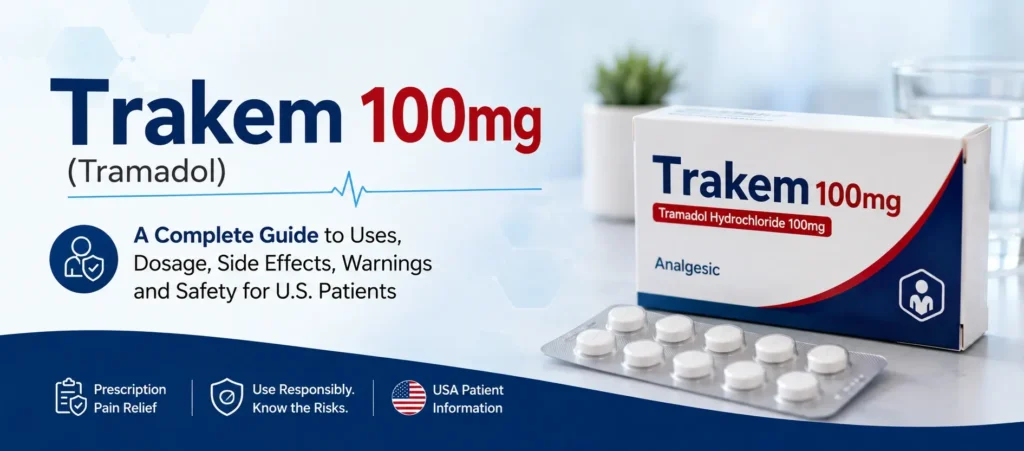
Trakem 100mg is presented as a tramadol hydrochloride 100mg product. The product information on the referenced PrimeReliefRx page describes it as a prescription opioid analgesic used for pain management.
For U.S. patients, however, the most important information comes from the current prescribing information for tramadol hydrochloride, rather than from a brand name alone. FDA-approved immediate-release tramadol tablets are indicated for adults with pain severe enough to require an opioid analgesic when alternative treatments are inadequate. Tramadol is classified as a Schedule IV controlled substance in the United States.
This guide explains what patients should know about tramadol 100mg, including how it works, when it may be prescribed, dosage considerations, common side effects, serious warnings, interactions, dependence, and safer use.
What Is Trakem 100mg?
Trakem 100mg is described as containing 100mg of tramadol hydrochloride. Tramadol is a centrally acting opioid analgesic used to manage certain types of pain in adults.
Rather than simply treating pain at the site where it occurs, tramadol works within the central nervous system to alter how pain signals are processed and perceived.
It is important to distinguish the brand or product name from the active ingredient. U.S. prescribing decisions are based on the specific drug, strength, formulation, patient characteristics, and approved labeling—not simply on a product name.
Current U.S. labeling identifies immediate-release tramadol hydrochloride tablets as an opioid medicine indicated for adults when pain is severe enough to require opioid treatment and alternative treatments are inadequate.
What Is Trakem 100mg Used For?
Tramadol may be prescribed for adults experiencing pain that requires prescription-strength treatment.
Depending on the patient’s circumstances, a healthcare professional may consider an opioid when:
- Pain is sufficiently severe to require opioid analgesia
- Non-opioid treatments have not provided adequate relief
- Other treatment options are unsuitable or not tolerated
- The potential benefits are judged to outweigh the risks
U.S. prescribing information specifically emphasizes that opioids such as tramadol should be reserved for patients for whom alternative treatments are ineffective, not tolerated, or otherwise inadequate.
This means tramadol is not automatically appropriate simply because someone has moderate pain. The underlying cause, severity, duration, previous treatments, medical history, and individual risk factors all matter.
How Does Tramadol Work?
Tramadol has a distinctive mechanism compared with some other opioid medicines.
It acts as a mu-opioid receptor agonist while also inhibiting the reuptake of norepinephrine and serotonin. These combined effects influence how the central nervous system processes pain signals.
This dual pharmacological activity also helps explain why tramadol has safety considerations beyond typical opioid effects.
Changes in serotonin signaling can contribute to the risk of serotonin syndrome, particularly when tramadol is combined with certain antidepressants or other serotonergic medicines. Tramadol can also increase seizure risk in susceptible patients.
Therefore, tramadol should not be viewed simply as a weaker or safer version of another opioid.
Trakem 100mg Dosage: What Patients Should Know
A 100mg tablet strength does not mean that every patient should take 100mg.
The appropriate tramadol dose depends on factors such as:
- Severity of pain
- Previous exposure to opioids
- Age
- Kidney function
- Liver function
- Other medicines being taken
- History of substance misuse
- Risk of seizures
- Respiratory health
For U.S. immediate-release tramadol tablets, current prescribing information recommends individualized dosing and use of the lowest effective dose for the shortest duration consistent with the patient’s treatment goals.
U.S. immediate-release tramadol labeling includes 50mg and 100mg tablet strengths. After appropriate titration, 50mg to 100mg may be administered every 4 to 6 hours as needed for pain, subject to the applicable maximum daily dose and patient-specific adjustments.
These figures are not personal dosing instructions.
Patients with severe renal or hepatic impairment may require different dosing. For example, U.S. labeling recommends a longer dosing interval and lower maximum daily exposure in certain patients with severe kidney impairment, while severe hepatic impairment also requires a modified regimen.
Your prescribed instructions should always take priority over general online information.
Why Should You Not Increase Trakem 100mg Yourself?
If pain remains uncontrolled, taking additional tramadol without medical guidance can be dangerous.
Increasing opioid exposure can increase the risk of:
- Excessive sedation
- Respiratory depression
- Overdose
- Seizures
- Drug interactions
- Misuse and dependence
The FDA-approved labeling recommends periodic reassessment of patients receiving tramadol to determine whether continued opioid treatment remains appropriate and whether adverse effects or signs of misuse are developing.
If your prescribed treatment is not adequately controlling your pain, speak with your prescriber rather than taking extra tablets.
How Should Trakem 100mg Be Taken?
If your healthcare professional has prescribed a tramadol product, follow the exact instructions on your prescription.
General safety principles include:
- Take it only as prescribed.
- Do not exceed the prescribed amount.
- Do not take extra doses to compensate for inadequate pain relief.
- Take tablets according to the instructions for your specific formulation.
- Do not crush or chew an extended-release formulation.
- Avoid alcohol.
- Do not combine tramadol with other sedating medicines unless your healthcare professional has specifically advised you to do so.
- Do not share tramadol with anyone else.
Common Tramadol Side Effects
Not everyone experiences side effects, but tramadol can cause several common reactions.
- Nausea
- Dizziness
- Drowsiness
- Constipation
- Headache
- Vomiting
- Dry mouth
- Fatigue
The frequency and severity of side effects vary between patients.
Some side effects may become less noticeable as the body adjusts, but persistent or severe symptoms should be discussed with a healthcare professional.
Serious Trakem 100mg Warnings
1. Respiratory Depression
One of the most serious opioid risks is respiratory depression, in which breathing becomes dangerously slow or inadequate.
The risk can be greater when treatment begins, after dosage increases, or when tramadol is combined with alcohol, benzodiazepines, or other central nervous system depressants. Severe respiratory depression can be fatal.
Signs that may indicate an opioid emergency include:
- Very slow or difficult breathing
- Extreme sleepiness
- Difficulty waking
- Loss of consciousness
- Unresponsiveness
Suspected opioid overdose requires immediate emergency medical attention.
2. Addiction, Abuse and Misuse
Tramadol is classified as a Schedule IV controlled substance in the United States and carries warnings concerning addiction, abuse, and misuse.
Dependence can occur even when a medicine is taken as prescribed.
Risk varies between individuals and can be influenced by treatment duration, dose, personal history, and other factors.
3. Seizures
Tramadol can increase the risk of seizures, including at recommended doses. The risk may be greater in people with a seizure history or when tramadol is combined with certain medicines that lower the seizure threshold.
Patients with epilepsy or previous seizures should make sure their prescribing clinician knows about their medical history.
4. Serotonin Syndrome
Because tramadol affects serotonin signaling, it can contribute to serotonin syndrome, particularly when combined with other serotonergic medicines.
Possible symptoms include:
- Agitation
- Confusion
- Excessive sweating
- Fever
- Rapid heartbeat
- Muscle rigidity
- Muscle twitching
- Loss of coordination
Serotonin syndrome can be serious and requires prompt medical assessment.
Trakem 100mg Drug Interactions
Before taking tramadol, tell your physician and pharmacist about every medication and supplement you use.
This includes prescription medicines, over-the-counter products, vitamins, and herbal supplements.
Alcohol
Alcohol can increase central nervous system depression when combined with tramadol.
This can increase sedation and potentially dangerous respiratory effects.
Benzodiazepines
Medicines such as certain benzodiazepines can intensify the sedative effects of opioids.
The combination can increase the risk of profound sedation, respiratory depression, coma, and death.
Antidepressants
Some antidepressants, particularly serotonergic medicines, can increase concerns about serotonin syndrome or seizures when combined with tramadol.
Examples include certain:
- SSRIs
- SNRIs
- TCAs
- Other serotonergic medicines
MAO Inhibitors
Tramadol is contraindicated with monoamine oxidase inhibitors and in patients who have used an MAOI within the preceding 14 days.
This is why a complete medication history is important before starting treatment.
Who Should Not Take Tramadol?
U.S. labeling identifies several contraindications for tramadol hydrochloride tablets.
- Children younger than 12 years
- Certain patients younger than 18 following tonsillectomy or adenoidectomy
- Significant respiratory depression
- Acute or severe bronchial asthma in an unmonitored setting or without appropriate resuscitative equipment
- Known or suspected gastrointestinal obstruction
- Hypersensitivity to tramadol or other opioids
- Concurrent MAOI use or MAOI use within the previous 14 days
Other patients may require additional evaluation before treatment.
Tell your healthcare professional if you have:
- Kidney disease
- Liver disease
- Asthma or COPD
- Sleep apnea
- A seizure disorder
- Depression or another mental health condition
- A history of alcohol or substance misuse
- Pregnancy
- Breastfeeding
- Previous reactions to opioid medicines
Trakem 100mg and Driving
Tramadol may cause drowsiness, dizziness, impaired concentration, and slower reaction time.
Do not drive or operate heavy machinery until you know how the medicine affects you and only when you are confident that you are not impaired.
This is particularly important when beginning treatment or when the dose changes.
Tramadol and Pregnancy
Pregnancy requires careful discussion with a healthcare professional before using an opioid.
Long-term opioid exposure during pregnancy can cause neonatal opioid withdrawal syndrome, which can be life-threatening if not recognized and treated.
If you are pregnant, planning to become pregnant, or breastfeeding, tell your prescriber before taking tramadol.
Do not stop a regularly used opioid suddenly without professional guidance.
Can Trakem 100mg Cause Dependence?
Yes.
Repeated opioid exposure can lead to physical dependence, meaning the body adapts to the presence of the medicine.
Physical dependence is different from addiction, although both are important considerations.
If a person who has developed physical dependence suddenly stops tramadol, withdrawal symptoms may occur.
Potential withdrawal symptoms can include:
- Anxiety
- Restlessness
- Sweating
- Insomnia
- Muscle aches
- Runny nose
- Nausea
- Abdominal discomfort
U.S. prescribing information warns against abrupt discontinuation in physically dependent patients because rapid withdrawal can result in significant symptoms and uncontrolled pain.
Any reduction or discontinuation plan should be determined with the prescribing clinician.
Trakem 100mg and Alcohol: Why the Combination Matters
Alcohol and tramadol both affect the central nervous system.
Taking them together can increase sedation and may increase the risk of serious breathing problems.
For this reason, patients should avoid alcohol while taking tramadol unless their healthcare professional specifically provides different advice.
What About Trakem 100mg With Other Painkillers?
Do not automatically combine tramadol with another opioid or prescription pain medicine.
The safety of combining medicines depends on the specific drugs involved. Adding another opioid or sedating medicine can increase the risk of excessive sedation and respiratory depression.
Before using another pain reliever alongside tramadol, ask your doctor or pharmacist whether the combination is appropriate.
Trakem 100mg Storage and Disposal
Prescription opioids should be stored securely.
- Keep the medicine in its original packaging.
- Store it according to the product’s labeled storage instructions.
- Keep it away from children and pets.
- Do not share the medicine with anyone else.
- Dispose of unused medication through an appropriate medication take-back option when available.
Because tramadol is a controlled substance, preventing accidental access or unauthorized use is particularly important.
Key Safety Points
- Tramadol is an opioid prescription medicine.
- It is a Schedule IV controlled substance in the United States.
- A 100mg tablet is not automatically appropriate for every patient.
- Use the lowest effective dose prescribed for your individual circumstances.
- Do not increase the dose without medical guidance.
- Alcohol and other CNS depressants can increase serious risks.
- Tramadol can cause respiratory depression and overdose.
- Seizures are a recognized risk.
- Serotonin syndrome can occur, particularly with certain interacting medicines.
- Physical dependence and withdrawal are possible.
- Do not share your medication.
- Store it securely.
- Ask a pharmacist about any unfamiliar medication combination.
Final Takeaway
Trakem 100mg is presented as a tramadol hydrochloride 100mg product, while tramadol itself is an opioid analgesic used in appropriately selected adults when pain is severe enough to require opioid treatment and alternative options are inadequate.
Tramadol works through opioid receptor activity as well as effects on serotonin and norepinephrine signaling. That combination can contribute to pain relief but also creates important safety considerations, including respiratory depression, seizures, serotonin syndrome, drug interactions, misuse, addiction, and physical dependence.
For U.S. patients, the safest approach is to use tramadol only under the direction of a licensed healthcare professional and according to the specific prescription and product labeling. Do not use the 100mg strength as a basis for determining your own dose, and never increase or discontinue treatment without professional guidance.
If you experience difficulty breathing, extreme sleepiness, loss of consciousness, a seizure, or other symptoms suggesting a serious reaction or opioid overdose, seek emergency medical attention immediately.
Frequently Asked Questions
What is Trakem 100mg?
Trakem 100mg is presented as a tramadol hydrochloride 100mg product. Tramadol is a prescription opioid analgesic used for certain types of pain in adults.
What is Trakem 100mg used for?
It is described as a pain-relief medicine containing tramadol. U.S. labeling for immediate-release tramadol indicates its use in adults with pain severe enough to require an opioid when alternative treatments are inadequate.
Is Trakem 100mg an opioid?
Yes. Tramadol is an opioid analgesic and is classified as a Schedule IV controlled substance in the United States.
Is 100mg of tramadol safe for everyone?
No. The appropriate dose varies according to the individual patient, medical history, other medications, kidney and liver function, previous opioid exposure, and other factors. A 100mg tablet should not be treated as a universally appropriate dose.
Can I take Trakem 100mg with alcohol?
Alcohol should be avoided while taking tramadol because combining CNS depressants can increase sedation and potentially dangerous respiratory effects.
Can Trakem 100mg cause seizures?
Yes. Tramadol can increase seizure risk, particularly in susceptible patients or when combined with certain medicines.
Can Trakem 100mg interact with antidepressants?
Yes. Some antidepressants can interact with tramadol and increase the risk of serotonin syndrome or seizures. Your complete medication list should be reviewed by a healthcare professional.
Can Trakem 100mg cause addiction?
Tramadol has recognized potential for misuse, abuse, addiction, and physical dependence. It should be used only as prescribed.
Can I drive after taking Trakem 100mg?
Tramadol can affect alertness, coordination, and reaction time. Do not drive or operate machinery until you know how the medication affects you and only when you are confident that you are not impaired.
Can I stop Trakem 100mg suddenly?
If you have been taking tramadol regularly, do not stop it abruptly without speaking with your prescribing healthcare professional. Physical dependence can lead to withdrawal symptoms following sudden discontinuation.
Switching takes about two minutes.
Staying is what takes years.
Start a transfer now — we’ll confirm your price and delivery date today.
Start my transfer