Medical review: Prepared for review by a licensed pharmacist or qualified healthcare professional.
Country focus: United States
Content type: Patient education
Sleep difficulties can affect concentration, mood, energy, and everyday functioning. When insomnia becomes persistent or significantly interferes with daily life, a healthcare professional may evaluate whether medication is appropriate alongside other treatment approaches.
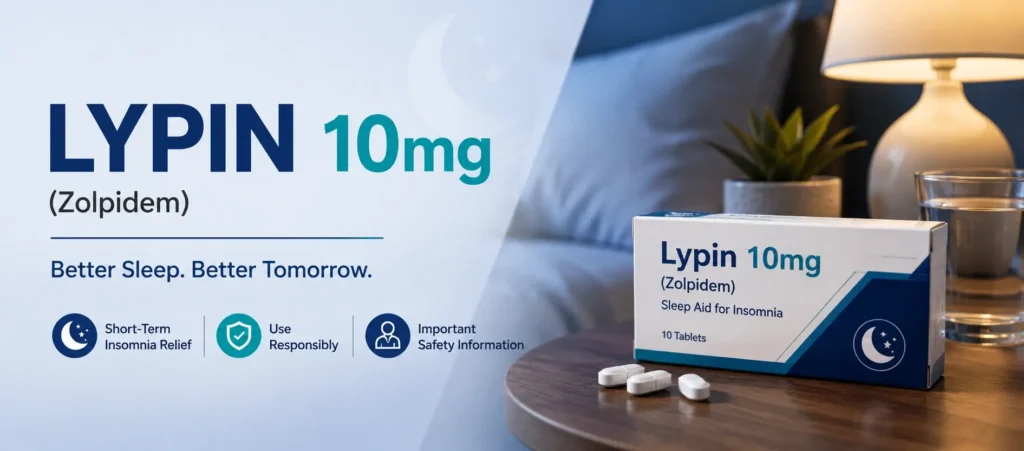
Lypin 10mg is listed by medicine references as containing zolpidem 10mg, a prescription sedative-hypnotic used for insomnia.
For U.S. patients, an important distinction is that Lypin is a brand or product name, while zolpidem is the active ingredient. FDA-approved U.S. labeling for zolpidem tartrate tablets identifies zolpidem as a Schedule IV controlled substance and indicates it for the short-term treatment of insomnia characterized by difficulty with sleep initiation.
This guide explains what patients should know about Lypin 10mg and, more broadly, zolpidem safety in the United States.
What Is Lypin 10mg?
Lypin 10mg is listed as a tablet containing 10mg of zolpidem. Zolpidem belongs to the sedative-hypnotic group commonly known as Z-drugs.
Zolpidem acts on the central nervous system and is primarily used to help people with certain forms of insomnia fall asleep.
For U.S. patients, however, it is important not to assume that an internationally marketed brand automatically has the same regulatory status as a U.S.-approved product. If you have obtained a product labeled Lypin 10mg, a U.S.-licensed pharmacist can help verify its active ingredient, strength, manufacturer, and appropriate use.
FDA-approved immediate-release zolpidem tablets are prescription medicines and are classified as Schedule IV controlled substances in the United States.
What Is Lypin 10mg Used For?
Because Lypin 10mg contains zolpidem, its intended therapeutic role is related to insomnia.
U.S. prescribing information specifies that immediate-release zolpidem is indicated for the short-term treatment of insomnia characterized by difficulties with sleep initiation.
Insomnia can involve:
- Difficulty falling asleep
- Difficulty staying asleep
- Waking earlier than intended
- Poor-quality or unrefreshing sleep
- Daytime tiredness caused by inadequate sleep
However, not every sleep problem should be treated with a sleeping pill.
Insomnia can sometimes be associated with anxiety, depression, chronic pain, sleep apnea, medications, irregular sleep schedules, caffeine, alcohol, or another underlying medical condition. If insomnia does not improve after treatment, the underlying cause may need to be reassessed.
How Does Zolpidem Work?
Zolpidem works primarily through the GABA-A receptor system in the brain.
GABA, or gamma-aminobutyric acid, is an inhibitory neurotransmitter. Zolpidem acts as a positive modulator at GABA-A receptors, increasing the inhibitory effects of GABA in the central nervous system. This reduces certain forms of neuronal activity associated with wakefulness and produces a sedative effect.
In practical terms, zolpidem helps create conditions that make it easier to fall asleep.
It is not, however, a treatment for every cause of insomnia. The reason for the sleep disturbance should be considered before relying on medication.
Lypin 10mg Dosage: What Patients Should Know
A 10mg tablet does not mean that 10mg is the correct dose for every person.
Current U.S. labeling for immediate-release zolpidem recommends using the lowest effective dose. The recommended initial dose is:
- Women: 5mg once at bedtime
- Men: 5mg or 10mg once at bedtime
The dose should be taken immediately before bedtime, with at least 7 to 8 hours remaining before the planned awakening. The total dose should not exceed 10mg once daily for immediate-release tablets.
Older adults and patients with mild-to-moderate hepatic impairment generally require a lower dose under U.S. prescribing information. Zolpidem should be avoided in patients with severe hepatic impairment.
These figures are provided to explain U.S. prescribing information and should not be used as personal dosing instructions.
If your physician prescribed a particular dose, follow that prescription rather than changing the amount yourself.
How Should Lypin 10mg Be Taken?
If a healthcare professional has prescribed a zolpidem-containing medicine, it should be taken exactly as directed.
For immediate-release zolpidem, important administration principles include:
- Take the prescribed dose only once per night.
- Take it immediately before going to bed.
- Make sure you have 7 to 8 hours available for sleep.
- Do not take another dose during the same night.
- Do not take more than the prescribed amount.
- Follow your specific product’s instructions regarding food.
U.S. labeling notes that taking zolpidem with or immediately after a meal can slow its effect.
Do not change the dose simply because you feel that the medicine is not working quickly enough.
Is Lypin 10mg Appropriate for Everyone?
No.
Before prescribing zolpidem, a healthcare professional may need to consider several factors, including:
- Age
- Liver function
- Breathing problems
- Sleep apnea
- Other sedating medicines
- Alcohol use
- History of substance misuse
- Depression or other psychiatric conditions
- Previous reactions to sleep medicines
- History of complex sleep behaviors
Patients who have previously experienced complex sleep behaviors after taking zolpidem should not be treated with zolpidem again because of the risk of recurrence.
Common Zolpidem Side Effects
Like other prescription medicines, zolpidem can cause adverse effects.
Commonly reported effects include:
- Drowsiness
- Dizziness
- Headache
- Fatigue
- Reduced alertness
- Impaired coordination
- Memory problems
- Gastrointestinal symptoms
The exact experience varies from one patient to another.
If side effects become severe, persistent, or concerning, contact your healthcare professional.
Next-Day Drowsiness and Impaired Driving
One of the most important safety issues with zolpidem is next-day impairment.
A person can feel awake the following morning while still having reduced alertness, slower reactions, dizziness, or impaired coordination.
The FDA has specifically warned that zolpidem blood levels can remain high enough in some patients the following morning to impair activities requiring full alertness, including driving.
The risk can increase when:
- A higher dose is taken
- Less than 7 to 8 hours of sleep remain
- Alcohol is consumed
- Other central nervous system depressants are used
- Another sedative-hypnotic is taken
If you feel sleepy, dizzy, slowed, confused, or otherwise impaired, do not drive or operate machinery.
Complex Sleep Behaviors: A Major Zolpidem Warning
Zolpidem carries an FDA Boxed Warning for complex sleep behaviors.
These behaviors can happen while a person is not fully awake and may include:
- Sleepwalking
- Sleep-driving
- Preparing or eating food
- Making phone calls
- Performing other activities without remembering them later
The FDA has reported serious injuries and deaths associated with these behaviors. They can occur after the first dose or after continued use and may happen even at recommended doses.
If you discover that you have experienced a complex sleep behavior after taking zolpidem, the U.S. labeling instructs patients to discontinue the medicine immediately and contact their healthcare professional.
This warning is particularly important because patients may have no memory of what happened.
Lypin 10mg and Alcohol
Alcohol should be avoided while taking zolpidem.
Alcohol and zolpidem can both depress activity in the central nervous system. Using them together can increase sedation and impairment.
The FDA specifically advises patients taking Z-drugs not to drink alcohol before or while taking these medicines.
Do not assume that a small amount of alcohol is safe simply because you have previously tolerated zolpidem.
Lypin 10mg Drug Interactions
Always tell your doctor or pharmacist about prescription medicines, over-the-counter products, supplements, and other substances you use.
Opioids
Combining zolpidem with opioids can increase central nervous system depression and the risk of respiratory depression.
Benzodiazepines and Other Sedatives
Other central nervous system depressants can have additive effects with zolpidem, increasing sedation and impairment.
Other Sleep Medicines
The FDA advises against taking Z-drugs together with other sleep medicines unless specifically directed by a healthcare professional.
Alcohol
Alcohol can increase the sedative effects of zolpidem and should be avoided.
Medicines Affecting Zolpidem Metabolism
Certain medicines can alter zolpidem concentrations. U.S. prescribing information discusses interactions involving CYP3A4 inducers such as rifampin and St. John’s wort, as well as CYP3A4 inhibitors such as ketoconazole.
Because interactions can depend on the complete medication regimen, a pharmacist should review your medicines before starting treatment.
Can Lypin 10mg Cause Dependence?
Yes.
Zolpidem has recognized potential for abuse, misuse, physical dependence, and withdrawal effects.
The risk of dependence can increase with longer treatment. U.S. prescribing information recommends that treatment be as short as possible and states that prolonged treatment should involve reassessment of the patient’s condition.
Physical dependence is not the same as addiction. It means the body has adapted to repeated exposure to the medicine.
Patients who have been taking zolpidem regularly should not independently stop treatment or rapidly reduce the dose. Rapid dose reduction or abrupt discontinuation can produce withdrawal symptoms.
Speak with your prescriber before making changes.
Can Zolpidem Be Used Long Term?
Immediate-release zolpidem is intended for short-term treatment of insomnia, not indefinite self-directed use.
U.S. labeling states that long-term use is not recommended and that treatment should be as short as possible. If extended treatment is considered, the patient’s condition should be reassessed because the risk of abuse and dependence increases with treatment duration.
If insomnia continues, it is worth investigating why.
Long-lasting sleep problems may be associated with:
- Anxiety
- Depression
- Chronic pain
- Sleep apnea
- Restless legs syndrome
- Medication effects
- Shift work
- Irregular sleep patterns
- Excessive caffeine
- Alcohol use
- Other medical conditions
For persistent insomnia, clinicians may also consider non-drug approaches such as cognitive behavioral therapy for insomnia (CBT-I).
Lypin 10mg and Breathing Problems
Sedative-hypnotic medicines can affect the central nervous system and may be particularly concerning for people with impaired respiratory function.
U.S. zolpidem labeling advises caution in patients with compromised respiratory function, including certain patients with sleep apnea, and when zolpidem is used with opioids or other central nervous system depressants.
Tell your healthcare professional if you have:
- Sleep apnea
- COPD
- Other chronic breathing problems
- Myasthenia gravis
- A history of respiratory depression
Never combine zolpidem with an opioid or another sedative without professional guidance.
Lypin 10mg and Liver Disease
The liver plays an important role in clearing zolpidem from the body.
Patients with mild-to-moderate hepatic impairment may require a lower dose. U.S. prescribing information recommends 5mg once daily for these patients and advises avoiding zolpidem in severe hepatic impairment because of the potential for hepatic encephalopathy.
If you have liver disease, make sure your prescriber knows before treatment begins.
Zolpidem and Pregnancy
Pregnancy requires an individualized medical assessment.
Current U.S. labeling states that zolpidem exposure late in the third trimester may cause respiratory depression or sedation in newborns.
If you are pregnant, planning to become pregnant, or breastfeeding, discuss zolpidem with your healthcare professional before taking it or making changes to existing treatment.
Do not discontinue a regularly used prescription medicine without professional advice.
Lypin 10mg vs. U.S. Zolpidem Products
| Feature | Lypin 10mg | U.S. Zolpidem Tartrate |
|---|---|---|
| Active Ingredient | Zolpidem 10mg | Zolpidem tartrate |
| Drug Class | Sedative-hypnotic / Z-drug | Sedative-hypnotic / Z-drug |
| Main Use | Used for the short-term management of insomnia | Short-term treatment of insomnia, particularly difficulty falling asleep |
| 10mg Strength | Marketed as a 10mg strength | 10mg tablet strength is available for certain FDA-approved zolpidem products |
| U.S. Regulatory Status | Brand-specific U.S. regulatory status should be independently verified | FDA-approved zolpidem products are available in the United States |
| Controlled Substance | Classification depends on the product and jurisdiction | Schedule IV controlled substance in the United States |
| Key Safety Concerns | Zolpidem-related risks may include next-day impairment, complex sleep behaviors, and dependence or misuse | Warnings include complex sleep behaviors, next-day impairment, dependence, and misuse |
The comparison does not mean that a Lypin tablet should automatically be substituted for a U.S.-approved zolpidem product. Patients should verify the specific medicine with a licensed pharmacist.
Practical Tips for Safer Zolpidem Use
If your healthcare professional has prescribed zolpidem, these basic precautions can help reduce avoidable risks:
- Take only the prescribed dose.
- Take it immediately before bedtime.
- Make sure 7 to 8 hours remain for sleep.
- Do not take another dose during the same night.
- Avoid alcohol.
- Do not combine it with another sleep medicine unless instructed.
- Ask about interactions before using other sedating medicines.
- Do not drive if you feel impaired.
- Tell your doctor about breathing problems or sleep apnea.
- Report unusual nighttime behaviors immediately.
- Keep the medication away from children and other people.
- Do not share your prescription.
- Do not stop regular treatment abruptly without medical advice.
Key Safety Points
- Lypin 10mg is listed as containing zolpidem 10mg.
- Zolpidem is a prescription sedative-hypnotic.
- U.S. immediate-release zolpidem is indicated for short-term treatment of insomnia involving difficulty with sleep initiation.
- U.S. zolpidem products are classified as Schedule IV controlled substances.
- A 10mg tablet is not automatically the right dose for every patient.
- U.S. labeling recommends the lowest effective dose.
- At least 7 to 8 hours should remain before planned awakening.
- Alcohol should be avoided.
- Zolpidem can cause next-day impairment.
- Complex sleep behaviors can result in serious injury or death.
- Zolpidem can cause misuse, dependence, and withdrawal.
- Do not combine zolpidem with other sedating medicines without professional advice.
- Patients with respiratory or liver problems should discuss these conditions with their prescriber.
Final Takeaway
Lypin 10mg is listed as a zolpidem 10mg product, while zolpidem is an FDA-approved prescription sedative-hypnotic used for certain forms of insomnia in the United States.
The most important point for patients is that 10mg is a tablet strength, not a universal dose. U.S. prescribing information recommends lower initial dosing in certain patients and emphasizes using the lowest effective dose for the shortest appropriate period.
Zolpidem also has safety considerations that should not be overlooked. Next-day impairment can affect driving and other activities requiring full alertness, while complex sleep behaviors such as sleepwalking and sleep-driving can cause serious injury.
If you have been prescribed a zolpidem-containing medicine, use it exactly as directed. Avoid alcohol, do not combine it with other sleep medicines unless instructed, and tell your healthcare professional about opioids, sedatives, breathing disorders, liver disease, pregnancy, or other relevant health conditions.
If you experience a complex sleep behavior after taking zolpidem, the FDA labeling instructs that the medicine should be discontinued and your healthcare professional contacted immediately.